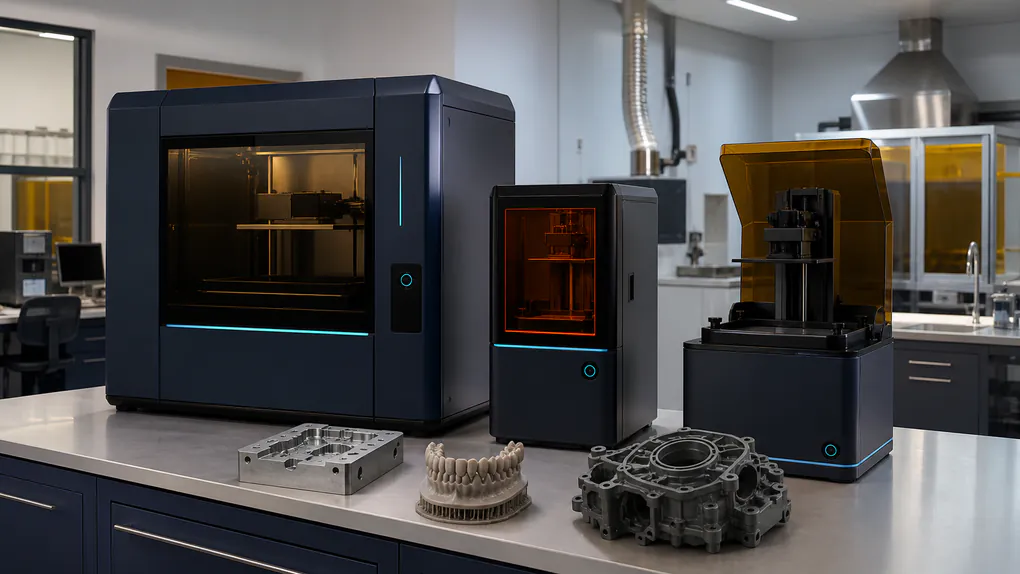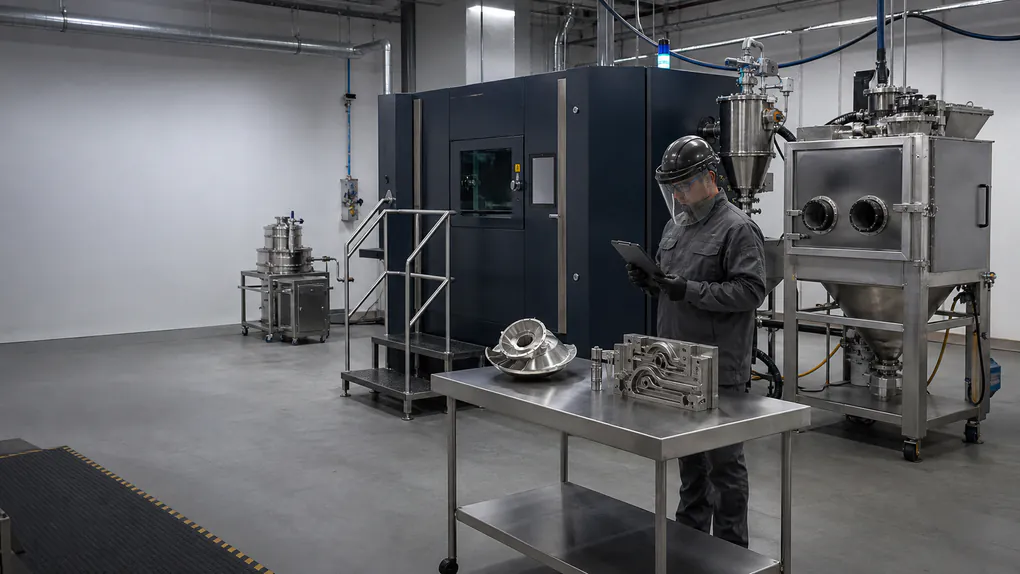
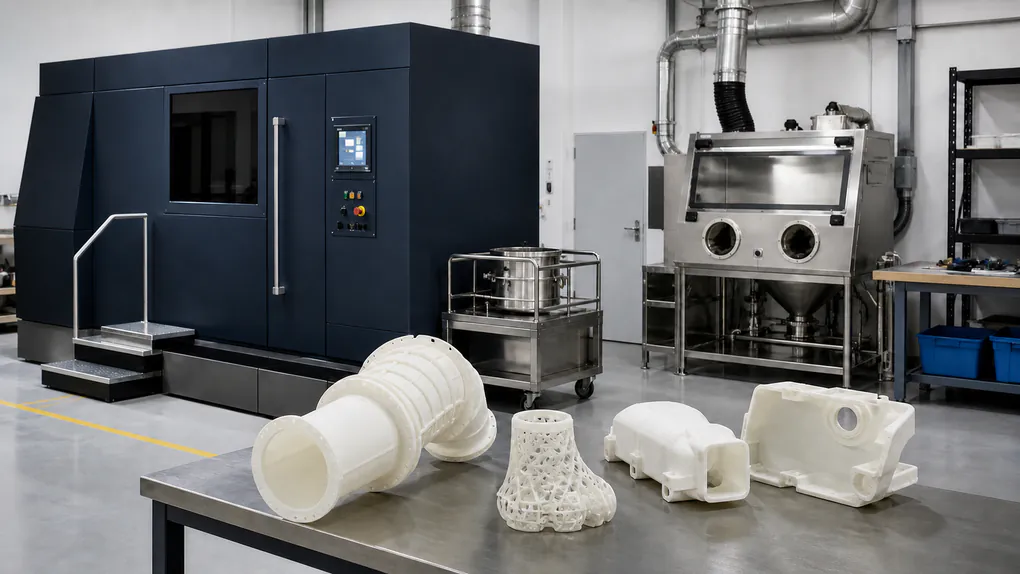
Unbranded industrial polymer SLS machine with powder station and white nylon production parts

Polymer SLS systems · OEM & bulk procurement

Industrial SLS 3D Printers specified around your production requirement

Polymer powder bed systems for support-free nylon and elastomer parts, selected through thermal consistency, powder refresh, depowdering and good-parts yield.

Illustrative technology image. The final proposal names the actual model, revision, production site and configuration.

Buyer painQuotes that cannot be compared because model scope, evidence and site work are different.
EverBen approachOne requirement brief, one return-field table and written acceptance gates.
Commercial modelMOQ, OEM program and bulk pricing are provided for the approved configuration.

EverBen equipment directory

2 EverBen models and series in this process family

Compare model summaries, configuration limits and adjacent models. Each detail page identifies its reference status and separates pending fields from reference values.

Current availability and the mapping to a quoted machine are pending confirmation for every record. Source specifications require a current signed datasheet; conflicting fields remain open.

SLS · Model

EverBen SLS P260 Pro 3D Printer

SLS P260 Pro: 260 × 260 × 400 mm polymer SLS reference with unresolved CO₂/fibre laser options and a 280 °C versus category-temperature discrepancy.

Build envelope
260×260×400mm
Layer setting
0.06-0.3mm adjustable
Laser
Pending confirmation — The 60 W CO₂ and 300 W fibre options lack a wavelength, powder and temperature mapping; do not assume interchangeable material compatibility.

Availability: pending confirmation · Needs configuration confirmation
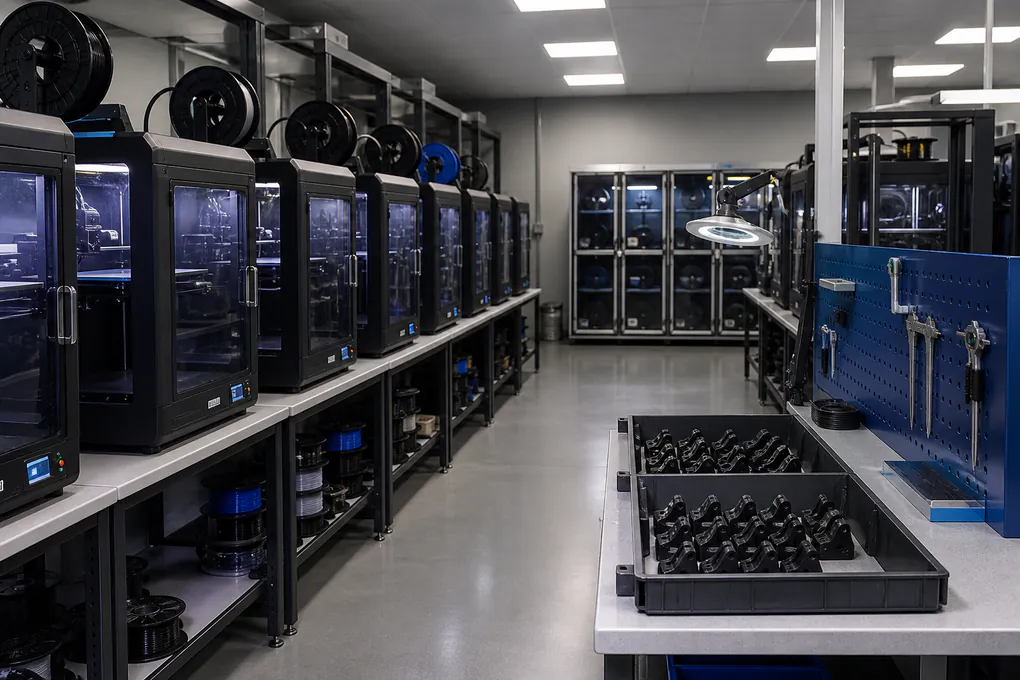
Owner-supplied third-party catalog reference

Industrial SLS 3D Printers attributes to confirm in the named proposal

These ranges come from a third-party 2025 equipment catalog supplied by the site owner. They are not EverBen-branded specifications and do not prove manufacturing, authorization or current availability. A named manufacturer, authorization status and current signed datasheet must control any proposal or order.

ProcessPolymer selective laser sintering
Catalog reference build range260 × 260 × 400 mm and 440 × 440 × 450 mm examples
Catalog laser reference60 W CO₂ laser shown; current datasheet confirmation required
Catalog thermal referenceUp to 220 °C forming-chamber reference
Powder systems to scopeFeed method, recoater, refresh ratio, sieve, blending, cooling and depowdering
Buyer acceptance focusDensity, dimensions, surface, colour, ageing, refresh history and batch repeatability

01 · Application fit · Polymer SLS

When Industrial SLS 3D Printers is the right process—and when another route is safer

SLS heats a polymer powder bed near its process window and selectively sinters each layer, allowing surrounding powder to support many nested geometries.

The strongest starting cases for this Polymer SLS review are functional nylon prototypes, ducts, brackets and housings, wearables and elastomer concepts, low-volume spare parts and bridge production. The intended output must still be separated into prototype, tooling, bridge production or released production because the evidence and responsibility change at each stage.

Polymer SLS go/no-go question

Can the proposed process meet the part duty, material route and acceptance method for functional nylon prototypes without relying on an unverified brochure claim?

02 · Machine architecture · Polymer SLS

Industrial SLS 3D Printers architecture that changes the buying decision

Laser and focusing, heater zoning, surface-temperature sensing, feed cylinders, recoater, nitrogen strategy and cooling workflow govern consistency.

The proposal must name the installed configuration and explain how it supports functional nylon prototypes. The process label is not enough when the build mechanism, thermal or optical design, feed system and accessories can change both performance and maintenance.

Polymer SLS configuration freeze

For the proposed Polymer SLS route, record the manufacturer, model, revision, installed options, cell boundary and every third-party dependency before quotations are compared.

03 · Build and footprint · Polymer SLS

Industrial SLS 3D Printers build envelope, part orientation and factory access

The owner-supplied catalog reference lists 260 × 260 × 400 mm and 440 × 440 × 450 mm examples. Treat that only as an early planning range until the authorized manufacturer returns a current model and signed datasheet.

For ducts, brackets and housings, usable space depends on orientation, process margins, unloading and downstream handling. The site review must also cover machine footprint, packed size, weight, doorway route, floor loading and service clearance.

Polymer SLS space validation

Fit a representative ducts, brackets and housings part in the usable Polymer SLS envelope, then verify unloading, service access, packed dimensions and floor load for the named machine.

Have the part file or target specification?Send non-confidential inputs now; attach controlled files only after the project route is confirmed.
Open RFQ form

04 · Material route · Polymer SLS

Industrial SLS 3D Printers materials, conditioning and lot evidence

Common routes include PA12, glass-filled nylon and TPU, each with distinct conditioning, refresh, ageing, thermal and finishing behaviour.

The material brief should connect the exact grade or SKU with storage, conditioning, the proposed Polymer SLS configuration, process parameters, post-processing and the property test method. Bulk or private-label discussions begin only after this compatibility route is defined.

Polymer SLS material qualification

Approve one traceable Polymer SLS grade or SKU with its TDS, SDS, lot evidence, conditioning, parameter revision and downstream process.

05 · Part quality · Polymer SLS

Industrial SLS 3D Printers accuracy, repeatability and the real error mechanisms

Thermal gradients, shrink compensation, part packing, wall thickness, cooling and powder history affect dimensions and deformation.

Use a representative wearables and elastomer concepts geometry or an agreed coupon. Record orientation, material lot, build position, post-process, datum scheme, instrument and repeat count so input resolution cannot be mistaken for verified finished-part capability.

Polymer SLS measurement evidence

Use the same wearables and elastomer concepts geometry, material, orientation, post-process, datums, instrument and repeat count for every Polymer SLS candidate.

06 · Output and TCO · Polymer SLS

Industrial SLS 3D Printers throughput measured as accepted parts

Build height, nesting density, warm-up, exposure, cooling, breakout, depowdering, powder refresh and finishing determine delivered output.

A purchasing model for Polymer SLS should count preparation, changeover, build, cooling or curing, recovery, finishing, inspection, rejected parts and maintenance. Compare good parts per staffed shift and the consumables that control uptime rather than one peak speed value.

Polymer SLS capacity basis

Calculate accepted Polymer SLS parts per staffed shift with stated yield, changeover, downstream capacity, maintenance and consumable-life assumptions.

Have the part file or target specification?Send non-confidential inputs now; attach controlled files only after the project route is confirmed.
Open RFQ form

07 · Digital workflow · Polymer SLS

Industrial SLS 3D Printers software, parameter access and production data

Nesting, shrink compensation, thermal settings, job reports and material-lot records should be controlled and recoverable.

For a controlled functional nylon prototypes workflow, ask about file preparation, profile revision, user roles, offline operation, job records, export, backup, licences and remote support. OEM interface or MES work needs a separate functional specification and acceptance test.

Polymer SLS data-rights check

For Industrial SLS 3D Printers, freeze licence term, parameter access, offline rights, job-record export, backup, update policy and the remote-service security boundary.

08 · Site and EHS · Polymer SLS

Industrial SLS 3D Printers utilities, operator exposure and safety boundary

Plan power, nitrogen if required, conditioned powder room, dust extraction, combustible-dust controls, vacuum and housekeeping equipment.

The site-readiness return should assign every Polymer SLS utility, material-control and safety task to the buyer, equipment supplier or a licensed local contractor. A generic certificate cannot replace the exact declaration, manual, interlock review and destination-specific risk assessment.

Polymer SLS site-readiness gate

Approve the Polymer SLS utilities, extraction, material storage, fire controls, PPE, access and contractor responsibilities before shipment release.

09 · Downstream process · Polymer SLS

Industrial SLS 3D Printers post-processing and inspection capacity

Cooling, cake breakout, depowdering, blasting, dyeing, infiltration or coating and inspection must be sized to the production load.

Size the downstream route for the planned low-volume spare parts and bridge production load. Identify included equipment, buyer-supplied tools, subcontracted operations, consumables, waste streams and the quality gate that releases the finished part.

Polymer SLS downstream capacity

Confirm every Polymer SLS finishing and inspection step, its owner, batch capacity, consumables, waste route and release record.

Have the part file or target specification?Send non-confidential inputs now; attach controlled files only after the project route is confirmed.
Open RFQ form

10 · Technical acceptance · Polymer SLS

Industrial SLS 3D Printers sample build, FAT and SAT evidence

Distribute coupons and representative parts through the build volume, record refresh history and assess dimensions, density and mechanical behaviour.

The Polymer SLS acceptance document should fix the sample, material, configuration, parameters, inspection, pass criteria, witness method and corrective-action route. FAT verifies the contracted system before shipment; SAT closes installation and agreed output at the buyer site.

Polymer SLS acceptance record

Do not authorize the Polymer SLS shipment or final handover until the named configuration passes the agreed sample, inspection and corrective-action method.

11 · Project deployment · Polymer SLS

Industrial SLS 3D Printers installation, training and production handover

Deployment for Polymer SLS should start with the site drawing, access route, readiness checklist, shipment condition and named contacts. Commissioning records must connect utilities, safety checks, calibration, software setup and the acceptance build.

Operator training should use the proposed Industrial SLS 3D Printers workflow and cover material handling, job preparation, routine maintenance, fault recovery and quality records. Manuals, language, attendees, practical exercises and competency sign-off belong in the quote.

Polymer SLS handover package

Close Industrial SLS 3D Printers commissioning with signed readiness, calibration, sample, training, manuals, maintenance, spares and escalation records.

12 · Lifecycle and OEM scope · Polymer SLS

Industrial SLS 3D Printers warranty, spares, authorization and project terms

Include heaters, sensors, recoaters, optics, filters, seals, sieves, blasting media and powder-room consumables in the support plan.

OEM enclosure, language, material kits and powder-station layout can be reviewed; thermal or powder-route changes require validation. The response must also identify the authorized manufacturer and seller, MOQ, forecast, packing, delivery term, warranty start, exclusions, labour or travel treatment, critical spares and change-notification policy. No retail price can represent those variables safely.

Polymer SLS commercial boundary

The signed Polymer SLS offer must identify authorization, MOQ, OEM scope, delivery, warranty, exclusions, service responsibility, critical spares and change control.

Your RFQ inputs

What a Industrial SLS 3D Printers buyer should send

  • Part family, wall sections and mechanical use
  • PA12, filled nylon, TPU or target powder properties
  • Colour and surface requirements
  • Batch volume, nesting density and turnaround
  • Powder handling, room and post-process constraints

Comparable supplier return

What the polymer sls systems response should answer

  • Laser, thermal and recoating architecture
  • Qualified powder and refresh/blend method
  • Build-to-build thermal and dimensional evidence
  • Cooling, breakout, depowdering and finishing scope
  • FAT/SAT, training, maintenance and powder-safety plan

B2B procurement FAQ

Industrial SLS 3D Printers questions before technical shortlisting

Does SLS need support structures?

Most polymer SLS parts are supported by surrounding powder, but escape paths, packing, cooling and depowdering still constrain design.

Can all powder be reused?

No universal reuse percentage should be assumed. Define refresh ratio and limits using the material supplier method and property evidence.

Why is cooling time important?

Controlled cooling affects distortion and total turnaround, and early breakout can damage parts or change dimensions.

What should an SLS sample report include?

Powder grade and history, nesting position, parameters, cooling, finishing, dimensions and applicable mechanical or density results.

Next practical step

Build a comparable RFQ for industrial sls 3d printers.

Send the part, material, output, destination and acceptance target. The inquiry process structures the configuration, open questions and validation route without publishing a misleading retail price.

Request a custom B2B quote