
Application pathways
Match your 3D printing application to a process and a trial.
Compare candidate technologies, inspect model references and define the sample evidence needed for your part.
Send an application briefEditorial visualization; the final proposal identifies the exact model, evidence and project scope.Priority environments
Different applications require different proof.
These are evaluation pathways, not published EverBen customer case studies. Model links are starting points for comparison; a linked model has not been qualified for your application. DLP and LCD links describe technology routes without a named model.
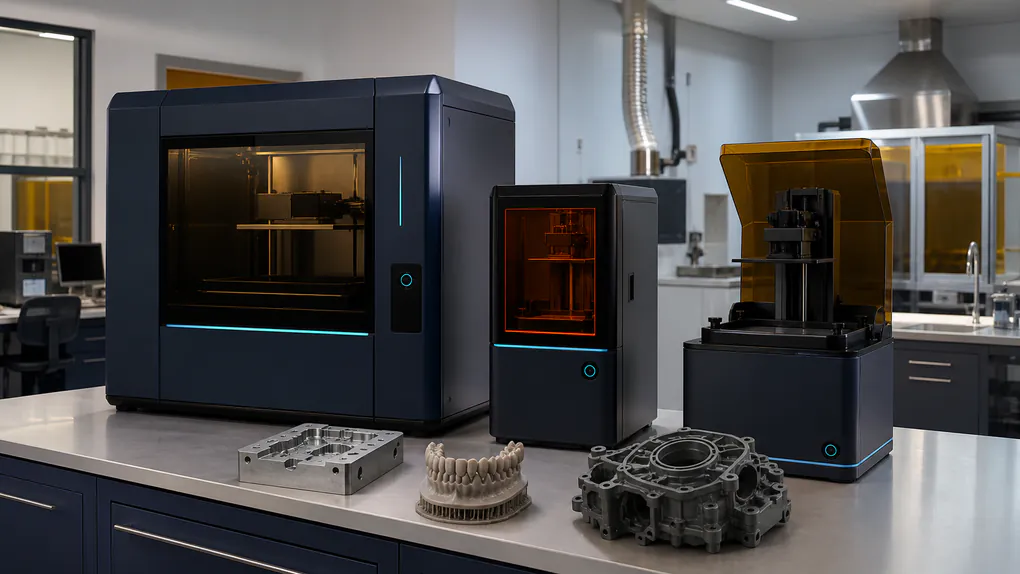
Application 01
Dental and precision resin workflows
SLA, DLP and LCD production where optical calibration, validated resin, dimensional evidence and wash/cure control determine the workflow.
- Typical output
- Models, patterns, guides or other defined outputs—each evaluated separately.
- Key failure risk
- Treating printer wavelength or resolution as evidence for every dental indication.
- Minimum sample
- Defined case file, exact resin, orientation, wash/cure cycle, repeat count and measurement plan.
Decision requirements
- Measured fine-feature performance
- Compatible resin and post-cure route
- Traceability and workflow instructions
- Product- and market-specific evidence
Evidence to request
- Indication-specific resin and wash/cure instructions
- Measurements at the center and edges of repeated builds
- Document holder, intended use and destination scope
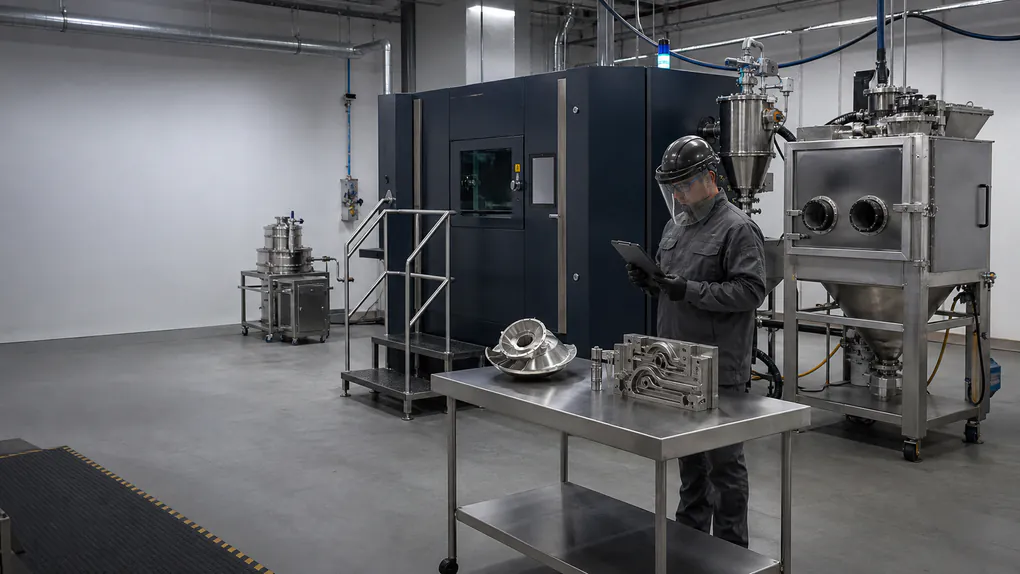
Application 02
Aerospace, energy and advanced engineering
Metal development, tooling or production projects where alloy, powder lifecycle, process qualification and inspection depth must be explicit.
- Typical output
- Prototype, tooling or production part—never assumed equivalent.
- Key failure risk
- Calling a generic machine, alloy or sample “aerospace grade” without a qualified route.
- Minimum sample
- Named machine, alloy, powder and parameter route with coupons, representative geometry and inspection.
Decision requirements
- Material and parameter evidence
- Powder and inert-gas safety
- Mechanical and dimensional tests
- Defined qualification responsibility
Evidence to request
- Alloy, parameter and post-processing revisions
- Coupon orientation and traceable inspection reports
- Powder history and a qualification responsibility plan
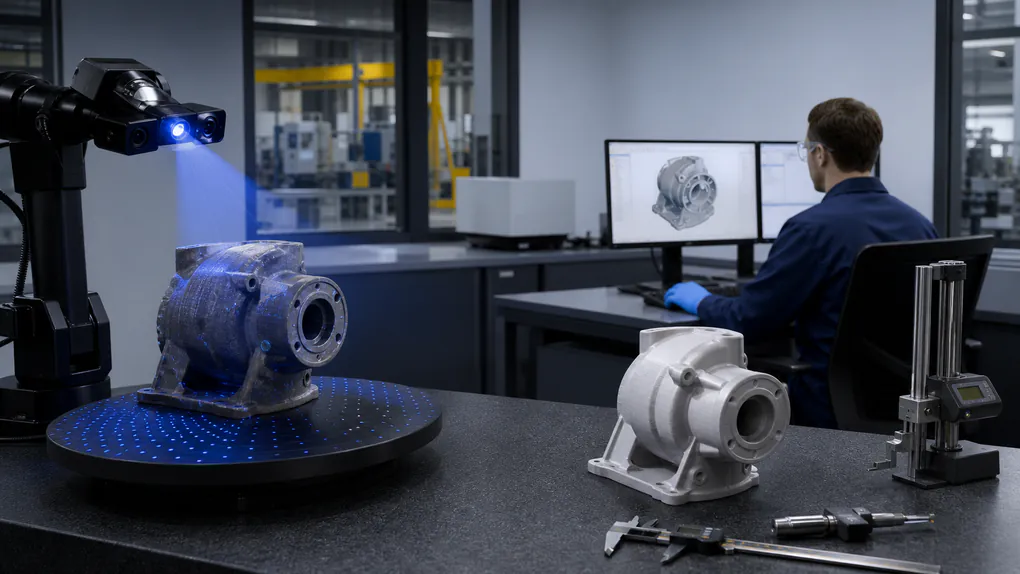
Application 03
Industrial tooling and replacement parts
Jigs, fixtures, tooling and legacy components selected around function, operating environment, failure mode and release risk.
- Typical output
- Fixture, tool, replacement component or low-volume production part.
- Key failure risk
- Selecting from scan geometry alone without load, temperature, chemicals, life or downtime impact.
- Minimum sample
- Prototype with fit/function checks, service conditions, critical dimensions and release authority.
Decision requirements
- Material and duty-cycle fit
- Design-for-process review
- Inspection and acceptance inputs
- CAD ownership and change control
Evidence to request
- Material choice tied to load, temperature and chemicals
- Fit/function test and inspection record
- Design ownership and replacement-part release decision
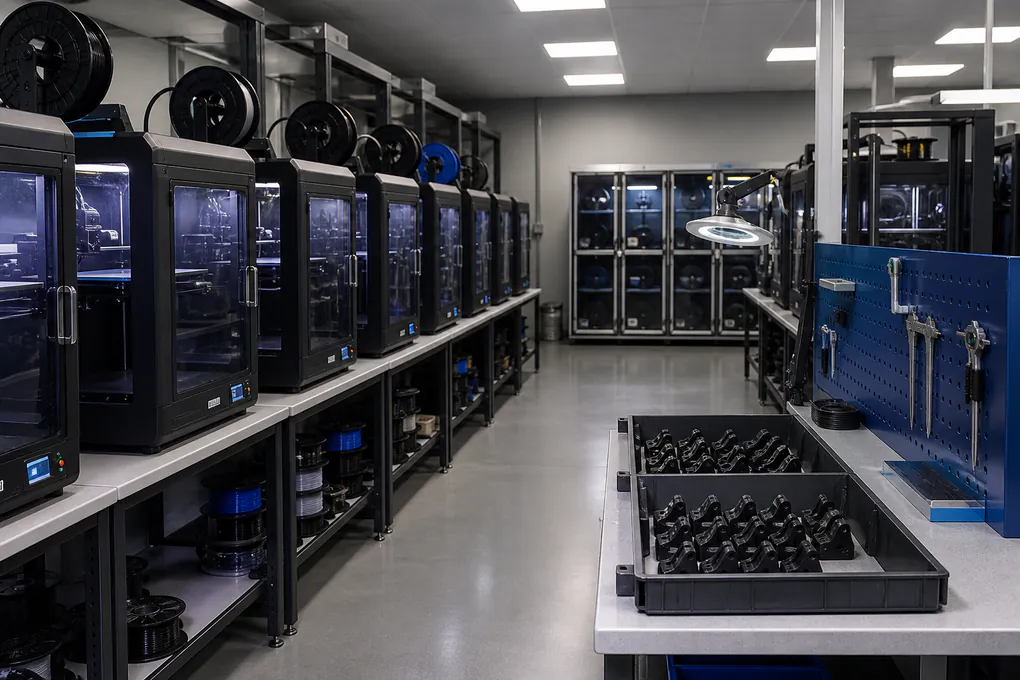
Application 04
Automotive and mobility prototyping
Resin, SLS and industrial FDM routes for design validation, assembly fixtures, ducts, housings and low-volume bridge parts.
- Typical output
- Appearance model, fit-check part, functional prototype, jig, fixture or controlled bridge-production component.
- Key failure risk
- Treating a prototype material or one successful print as evidence for vehicle-life heat, vibration, UV, chemical or load exposure.
- Minimum sample
- Representative geometry tested for fit, duty environment, assembly, repeatability and the agreed release level.
Decision requirements
- Prototype versus end-use status
- Thermal and chemical exposure
- Assembly and tolerance stack
- Change and release authority
Evidence to request
- Appearance, fit-check or functional-use classification
- Thermal/chemical exposure and assembly test plan
- Tolerance-stack measurements and design revision
Application 05
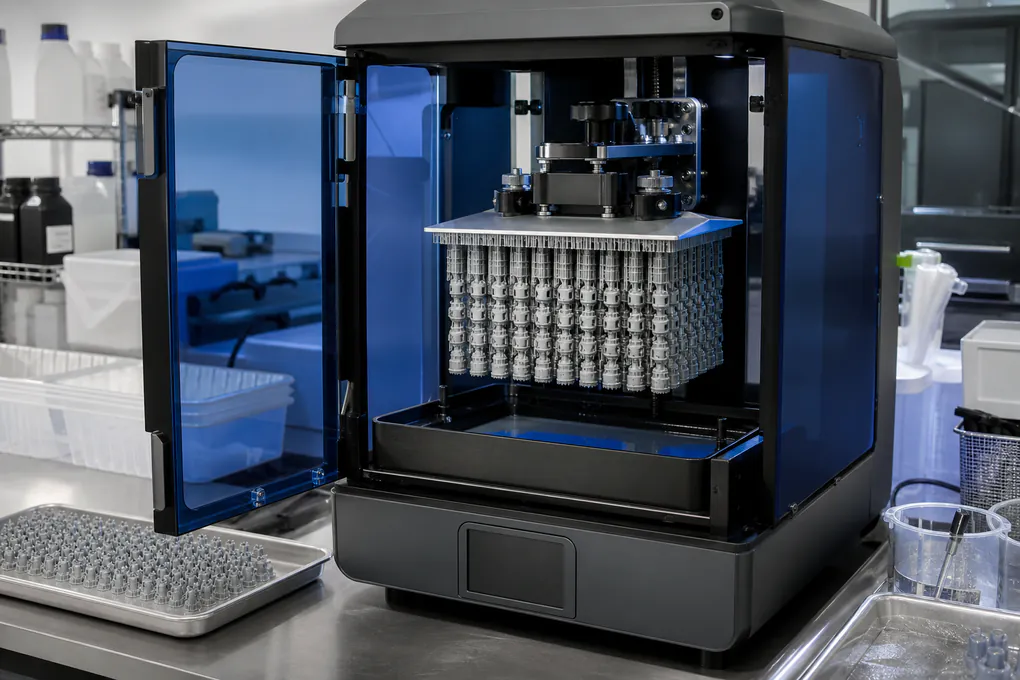
Electronics and consumer-product batches
LCD, DLP, SLS and FDM routes for enclosures, form studies, assembly aids and repeat small-part batches where consistency and finishing labor drive cost.
- Typical output
- Visual prototype, enclosure, fixture, master pattern or recurring small component.
- Key failure risk
- Using nominal resolution or printer count without measuring accepted parts, finishing time, material change and batch variation.
- Minimum sample
- A production-like mixed batch with edge and centre positions, defined finish, inspection plan and repeat build.
Decision requirements
- Cosmetic and dimensional criteria
- Batch consistency and yield
- Finishing and operator time
- Packaging and recurring demand
Evidence to request
- Mixed-batch layout and cosmetic grading criteria
- Accepted output and finishing labor from repeated jobs
- Material revision and applicable enclosure tests
Application 06
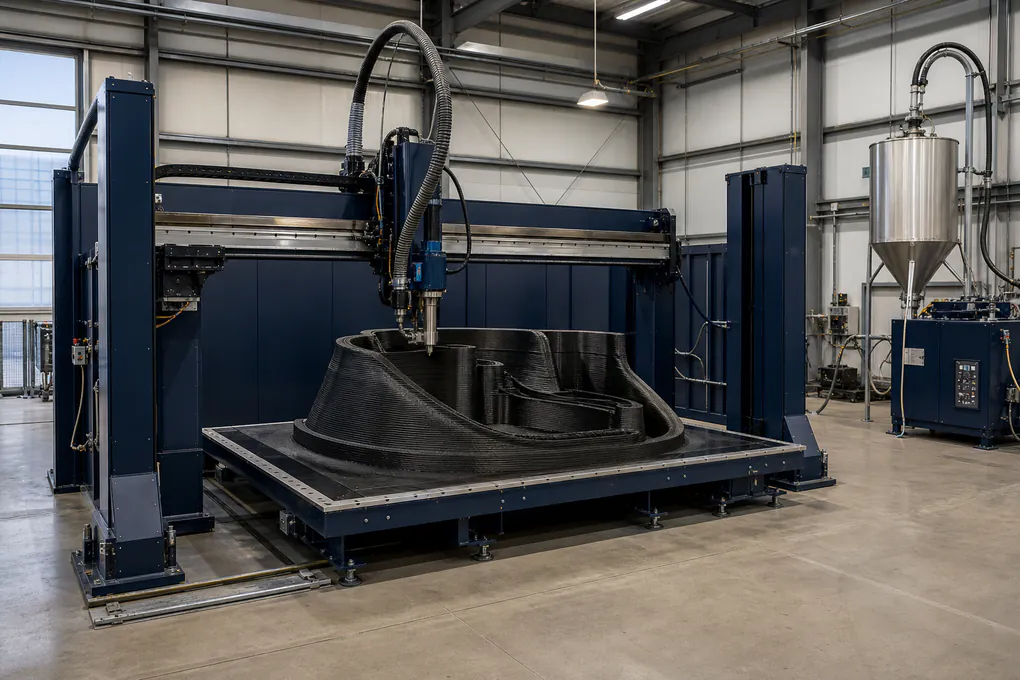
Molds, patterns and large-format tooling
Large SLA, FDM and FGF routes for molds, patterns and fixtures where thermal stability, bead or road strategy and finishing capacity matter.
- Typical output
- Pattern, mold, lay-up tool, fixture or near-net machining blank.
- Key failure risk
- Choosing build size without proving distortion, lifting, finishing and factory installation.
- Minimum sample
- Representative thick or curved section followed by a full-scale acceptance geometry.
Decision requirements
- Thermal and dimensional plan
- Material drying and deposition control
- Machining or sealing allowance
- Factory access and utility review
Evidence to request
- Tool-temperature limits and full-size distortion checks
- Drying/deposition record and machining allowance
- Lifting, access, sealing and tool-life trial plan
Application 07
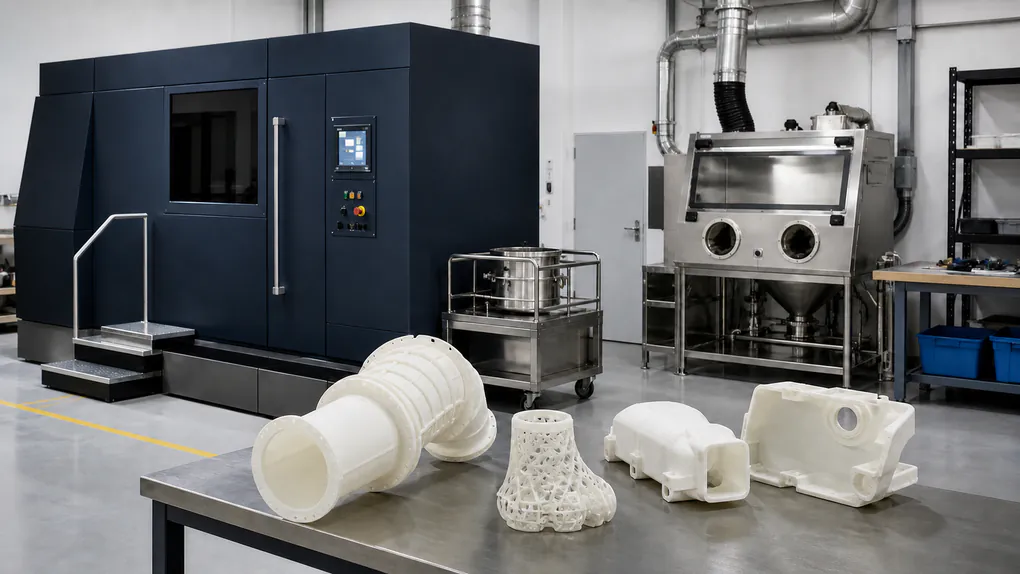
Nylon parts and distributed production
Support-free polymer powder production where nesting, thermal consistency, powder refresh, depowdering and good-parts yield shape capacity.
- Typical output
- Functional prototypes, housings, ducts, wearables or bridge-production batches.
- Key failure risk
- Using nominal build volume and reuse claims without powder history and accepted output.
- Minimum sample
- Parts and coupons distributed through the build, repeated with recorded powder refresh and cooling.
Decision requirements
- Qualified PA or TPU route
- Refresh and lot traceability
- Cooling and depowdering capacity
- Good-parts throughput model
Evidence to request
- Powder grade, blend ratio and thermal history
- Repeated-build measurements by position
- Cooling, depowdering and accepted-part cycle times
Sample record
Use one acceptance record for the trial.
Record file revision, intended use, machine configuration, material lot, print/finish route, measurement method, limits and actual results. Assign a reviewer to every unresolved result before moving to the next trial or purchase decision.
Define the sample and inspection deliverables →Safety and regulated use
Capability does not replace qualification.
For safety-critical, pressure-bearing, flight, medical or other regulated use, product design, process validation, material evidence, quality controls and competent professional review may be required. The website is a technical-question starting point, not approval to place a part into service.
Application go / no-go gate
Approve the process only after function, repeatability and release responsibility are proven.
A technically printable part is not automatically a production-ready part. Record the operating environment, failure consequence, material route, design authority, representative sample, repeat count, inspection method, acceptance limits, traceability and the person authorized to release the result.
Next practical step
Have a part or workflow that does not fit a standard category?
Send the function, material, environment, volume and current bottleneck. The next step is to identify the candidate route and evidence questions.